Background
A leading private-label lubricant distributor in North America was experiencing rapid growth across the Southwest US market. As shipment volumes doubled out of Texas, the distributor’s existing transportation model struggled to scale efficiently.
To support continued expansion, the distributor needed a flexible, cost-effective logistics solution that could integrate rail transportation, transloading, and bulk trucking while maintaining consistent service levels and customer satisfaction.
The Challenge
As demand accelerated, several operational challenges emerged:
- Capacity constraints: The distributor’s internal fleet and limited external carrier network could not consistently support increased shipment volumes, resulting in delayed deliveries and service risk across one of their main processing and packaging plants.
- Complex transportation management: Coordinating shipments across internal assets and multiple external carriers required increased time, manual effort, and administrative resources.
- Limited transloading experience: While leadership identified an opportunity to reduce long-haul truck miles by converting select lanes to rail-to-truck transloading, the distributor lacked the expertise and infrastructure to redesign its transportation network.
- Carrier access challenges: Without a strategic logistics partner, the distributor struggled to secure reliable, qualified bulk tanker carriers at scale across the Southwest and Houston markets.
Solution
KAG Logistics partnered with the distributor to design and implement a scalable transloading and multimodal transportation strategy, aligned with both immediate capacity needs and long-term growth objectives.
The solution included:
- Centralized transportation management: KAG provided a single point of contact for spot and expedited bulk liquid shipments, eliminating the need to manage multiple carrier relationships and streamlining day-to-day execution.
- Dedicated Carrier strategy: Based on a holistic analysis of shipment lanes, volumes, and service requirements, KAG implemented a Dedicated Carrier solution to stabilize capacity and improve reliability.
- Rail-to-truck transloading integration: KAG assumed management of the distributor’s internal railcar fleet, enabling long-haul freight to move by rail directly to their processing and packaging plant.
- Multimodal scalability: Initially focused on bulk liquid trucking, the solution expanded to include rail and dry van shipments over time. This phased approach allowed transportation modes to be consolidated under KAG’s management without disrupting customer deliveries.
Implementation from initial planning to the first loaded railcar was completed in approximately 3 months, with the network continuing to scale as demand increased.
Results and Key Takeaways
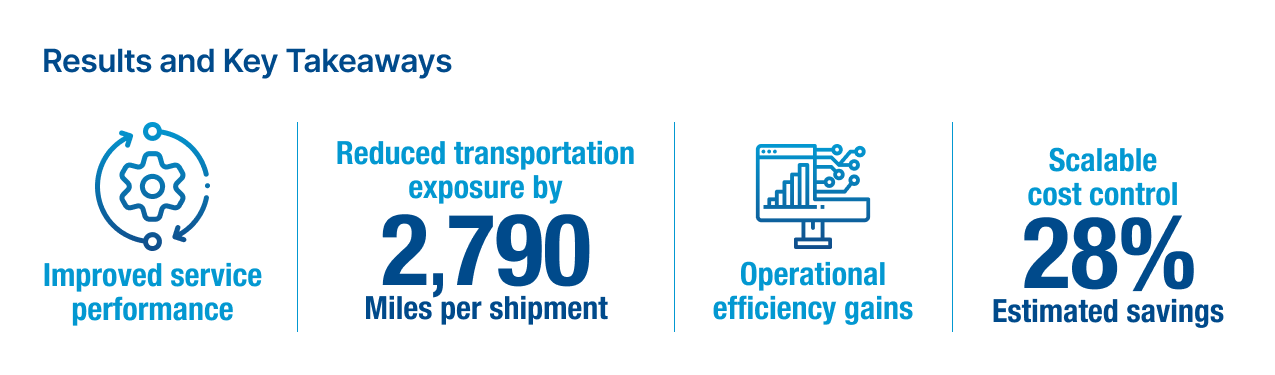
- Improved service performance: The distributor consistently met customer delivery commitments, protecting existing accounts, and supporting growth into new markets.
- Reduced transportation exposure: By shifting long-haul miles from truck to rail where appropriate, the distributor reduced highway exposure by approximately 2,790 miles per shipment.
- Operational efficiency gains: Outsourcing transloading and multimodal transportation management reduced internal workload and allowed the distributor to focus resources on core business growth.
- Scalable cost control: The flexible transportation network enabled cost-efficient growth, with estimated transportation savings of 28% compared to the prior truck-only model.
Why Rail Management and Transloading Worked
By combining rail efficiency and dedicated bulk trucking, KAG delivered a transportation model that could scale with demand while maintaining service reliability, safety, and compliance oversight.
Considering Rail Management and Transloading for Your Network?
For bulk liquid shippers facing capacity constraints, rising transportation costs, or rapid growth, railcar management can provide a practical path to greater flexibility and control.
Whether you’re exploring ways to reduce long-haul truck miles, expand into new markets, or simplify transportation management, a well-designed rail strategy can help align your logistics network with your business goals.
KAG works with shippers to evaluate when and where truck to rail conversion makes sense – designing scalable, multimodal solutions that support long-term growth without disrupting day-to-day operations.
If you’re considering a truck to rail conversion or looking to optimize your current transportation network, start with a conversation.