Choosing the wrong food-grade carrier can have serious repercussions, compromising food safety long before the product reaches the customer. In the best cases, it’s a rejected load and lost revenue. But in the worst cases, contamination can lead to illness, recalls, reputational damage and more.
To protect your product and your customers, you need to work with a food-grade transportation partner that understands how to operate effectively under the U.S. Food and Drug Administration’s Food Safety Modernization Act (FSMA). KAG built its food and beverage division, KAG Food Products, around exactly these standards. We operate one of North America’s largest dedicated food-grade fleets with the systems, scale and expertise to keep your product safe from origin to destination. Here’s how to identify quality bulk food transportation companies, including which red flags to watch out for.
Biggest Risks in Food-Grade Transportation
Product transportation failures have a direct impact on product quality and safety. That’s why you can’t rely on general freight or bulk trucking companies for food-grade transportation. Even carriers who claim to be “food-grade” don’t all follow the same process.
Without strict operating standards and proper sanitation protocols, your transportation partner could pose serious risks, including:
- Cross-contamination from prior loads
- Inadequate cleaning and verification
- Improper temperature control
- Weak documentation and product tracing
- Untrained drivers handling product, sealing or sanitation
What Separates True Food-Grade Carriers from General Freight Providers
A true food-grade transportation partner will protect food safety as an integral part of their process, with repeatable, reliable systems and documented compliance.
Here’s what to look for in a food-grade logistics provider:
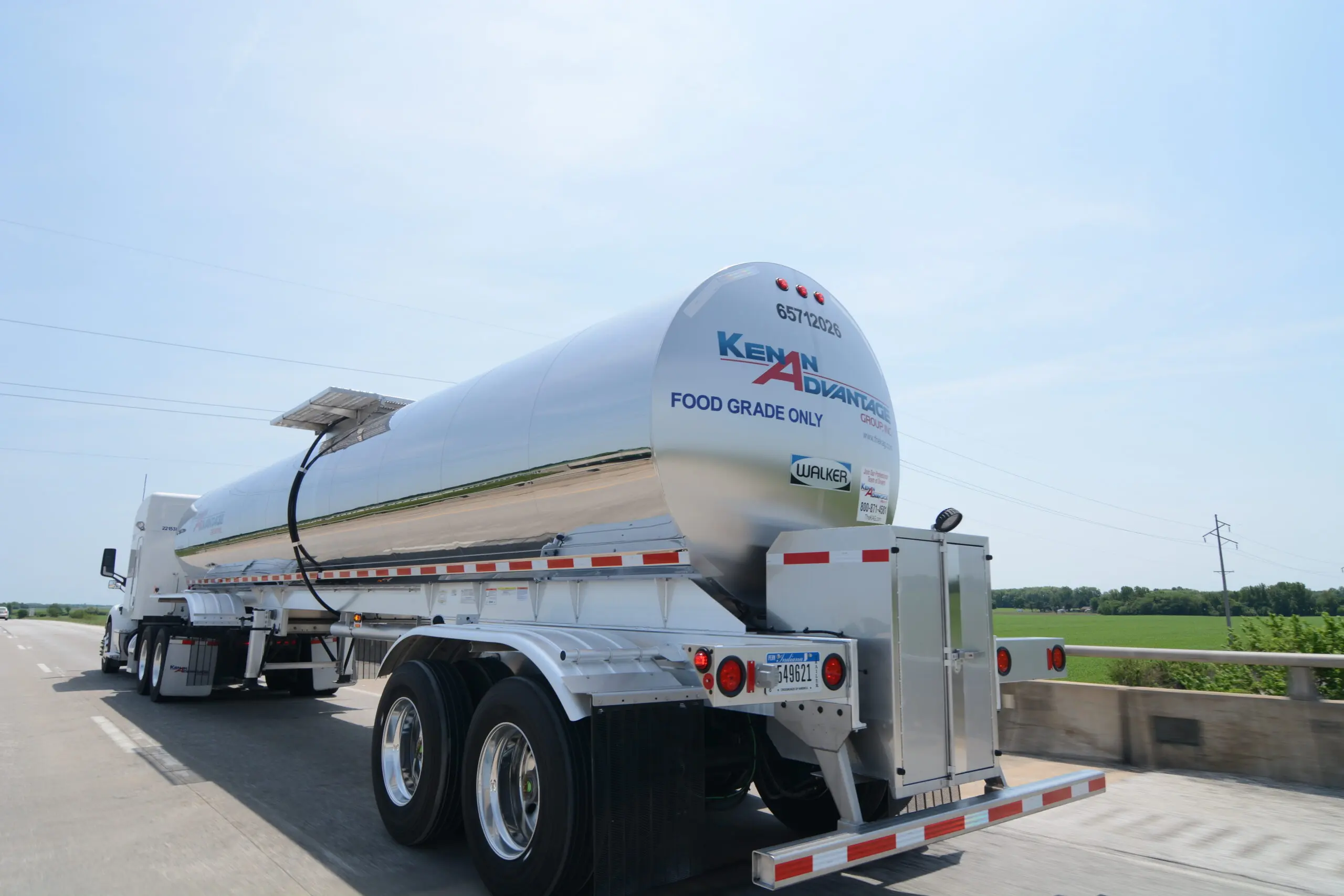
- Food-grade compliant equipment: They operate dedicated food-grade fleets. KAG supplies equipment purpose-built for food and beverage.
- Prior-load transparency: Transparent companies, like KAG, provide full traceability for every load, including prior-load documentation and wash tickets for every tanker as standard practice.
- Documented sanitation protocols: They follow strict cleaning and documentation processes. At KAG, our sanitation procedures are written, repeatable and auditable.
- Trained drivers: Their drivers understand proper food handling and sanitation. That’s why KAG invests in ongoing driver training specific to food-grade operations.
- Scalable coverage: Large carriers can keep the chain of custody within their own network, minimizing handoffs and ensuring consistency and predictability. KAG’s national footprint means fewer broker touchpoints and greater control end-to-end.
- Compliance-aligned processes: They use written food-safety plans and practice safe maintenance and storage of their fleet. KAG operates in full alignment with FSMA requirements across its network.
How KAG Delivers Food-Grade Transportation in Practice
It’s one thing to say you’re food-grade compliant; it’s another to operate a system built around it. KAG combines national scale with local execution. Our drivers know the regional lanes, our terminals are strategically positioned to minimize transit time, and we apply consistent protocols across every load regardless of origin or destination.
Other carriers offer a patchwork of brokers and sub-carriers. With KAG Food Products, you get a single accountable partner with a documented chain of custody at every step. That means fewer variables, faster issue resolution and strict food safety standards, whether you’re moving one load or one hundred.
Red Flags That Could Put Your Product at Risk
When shopping for a food-grade logistics company, there are red flags that should raise some concerns. If you spot any of the following in a transportation provider, it’s your sign to keep looking:
- Inconsistent service
- Lack of food safety framework
- Vague answers about their sanitation processes
- No prior load documentation
- Mixed-use equipment without clear separation
- Overreliance on third-party brokers
If you can’t trace and verify the product and its safety from beginning to end, you’re introducing too many variables that could put the safety of your delivery at risk.
Questions To Ask Before Choosing a Carrier
Before committing to a food-grade carrier, look at how they answer the following questions:
- What was the prior load for this equipment? Can you document it?
- Is your equipment dedicated to food-grade use or mixed use?
- Where do you do your washing? Do you provide wash tickets?
- How do you ensure chain of custody?
- What training do you provide your drivers?
- How do you maintain quality control with brokered loads?
If they can’t provide clear and confident answers (or documentation), that’s a sign their processes aren’t as airtight as they’re claiming.
KAG Is Built to Manage Food Safety at Scale
Where other carriers offer general freight with food-grade add-ons, KAG Food Products operates a dedicated food and beverage division with the infrastructure to match:
- Dedicated food-grade fleet
- Documented sanitation and prior-load traceability
- Trained drivers, not generalists
- National scale with local execution
- Minimal broker dependency
Trust KAG Food Products to protect your chain of custody intact from origin to destination. If you’re ready to work with a carrier that treats food safety as a system, not a checkbox, contact us to request a food and beverage transportation quote.


