Transportation costs are rising. Customer expectations are increasing. And supply chain teams are being asked to do more with fewer resources.
For chemical manufacturers and distributors, balancing cost, service, and flexibility can be especially challenging. Bulk products often travel long distances, require specialized handling, and must be delivered safely and reliably across multiple markets.
If your organization is facing any of these challenges, it may be time to consider a transloading strategy.
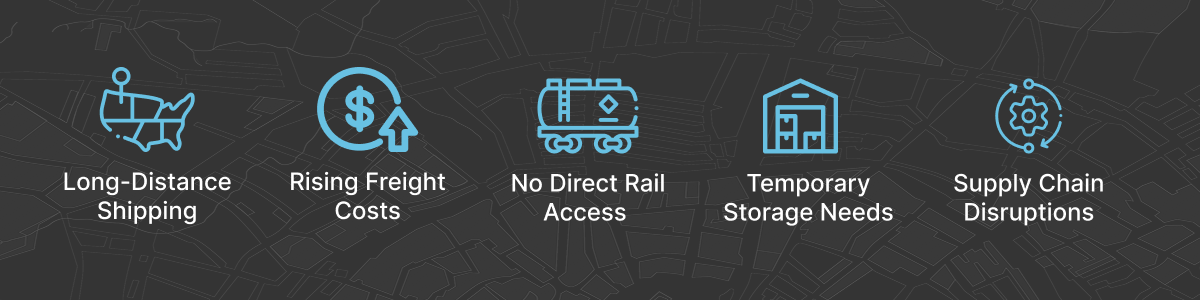
Here are five signs your supply chain could benefit from transloading.
1. You Want Rail Savings but Don’t Have Rail Access
Rail transportation offers significant cost advantages for many bulk shipments. However, not every manufacturing facility, warehouse, or customer location has direct rail service.
For example, a chemical distributor receiving rail shipments of sodium hydroxide, sulfuric acid, or industrial solvents may need to serve customers throughout a region that lacks rail access.
Transloading allows shipments to move by rail for most of the journey before being transferred to trucks for final delivery.
Benefits:
- Lower transportation costs
- Access to rail networks
- No investment in rail infrastructure
2. Freight Costs Continue to Rise
Transportation is often one of the largest expenses in a chemical supply chain.
If you’re moving plastic resins from the Gulf Coast to manufacturers throughout the Midwest, trucking every mile can become expensive. A transloading strategy can help optimize transportation costs by leveraging rail for long-haul movements while maintaining the flexibility of truck delivery.
Benefits:
- Reduced transportation spend
- Improved operating margins
- More efficient freight movement
3. Your Customer Base Is Expanding
As businesses grow, serving customers from a single location becomes increasingly challenging.
Chemical distributors often support manufacturers, municipalities, water treatment facilities, and industrial operations across multiple states. Strategically located transload facilities can help position inventory closer to customers, improving responsiveness and reducing transit times.
Benefits:
- Faster deliveries
- Improved customer service
- Expanded geographic reach
4. You Need More Flexibility During Demand Surges
Demand fluctuations are common across chemical markets.
Agricultural chemicals experience seasonal demand cycles. Water treatment products may see spikes during certain times of the year. Manufacturing activity can drive sudden increases in demand for industrial chemicals and plastic resins.
Many transload facilities provide temporary storage and inventory staging capabilities that help businesses respond more effectively to changing market conditions.
Benefits:
- Better inventory positioning
- Increased flexibility
- Improved responsiveness
5. You’re Looking to Build a More Resilient Supply Chain
Recent years have demonstrated how quickly transportation networks can be disrupted.
Weather events, labor shortages, infrastructure constraints, and market volatility can all impact supply chain performance. Businesses that rely on a single transportation mode often have fewer options when disruptions occur.
Transloading introduces additional routing and distribution flexibility, helping companies keep products moving when challenges arise.
For chemical companies supplying critical products, that flexibility can be essential.
Benefits:
- Greater transportation agility
- Reduced supply chain risk
- Improved customer reliability
What Does a Successful Transloading Strategy Look Like?
The most effective transloading strategies are built around a company’s unique supply chain requirements.
A successful solution considers:
- Product characteristics
- Transportation costs
- Delivery requirements
- Storage needs
- Customer locations
- Growth objectives
For chemical shippers, it also includes specialized handling capabilities, regulatory compliance requirements, and product-specific safety considerations.
When these factors align, transloading becomes more than a transportation service. It becomes a strategic advantage.
Is Your Supply Chain Ready?
If any of these signs sound familiar, your business may be a strong candidate for transloading.
Whether you’re transporting specialty chemicals, plastic resins, industrial gases, food-grade ingredients, or other bulk products, transloading can help create a more efficient, flexible, and resilient supply chain.
The right transloading partner can evaluate your current transportation network, identify opportunities for improvement, and develop a solution tailored to your business.
At KAG, we help customers leverage rail, truck, storage, and transloading solutions to optimize supply chain performance and support long-term growth.
Frequently Asked Questions
What is transloading?
Transloading is the process of transferring freight from one mode of transportation to another during transit, most commonly from rail to truck.
Can transloading reduce transportation costs?
Yes. Many businesses use rail for long-distance transportation and trucks for final delivery, helping reduce overall freight costs while maintaining delivery flexibility.
Which industries benefit from transloading?
Industries that commonly use transloading services include chemicals, plastics, food-grade products, industrial gases, fertilizer, construction materials, and other bulk commodities.
Wondering If Transloading Makes Sense for Your Business?
Every supply chain is different. The right transloading strategy depends on your products, transportation network, customer locations, and growth goals.
Complete the form below and a KAG transloading specialist will review your transportation needs and help identify opportunities to improve efficiency, flexibility, and cost performance.