When you move bulk liquids, transportation costs are more than just another line item. They directly affect margins, service levels, and transportation decisions that determine how reliably products reach their final destinations. With fuel prices constantly shifting, capacity tightening, and compliance costs adding up, every mile and every decision counts.
For many fuel and chemical shippers, transloading has become a practical way to keep transportation costs in check without cutting corners on safety or reliability.
It’s not about choosing trucks over rail, or vice versa. It’s about using each mode where it works best and costs less.
Long Hauls Are Where Costs Add Up Quickly
Over-the-road trucking is essential for bulk liquid delivery, especially for regional and last-mile moves, but when distances stretch hundreds or thousands of miles, those costs escalate quickly. Fuel cost, driver hours, equipment wear, tolls, and insurance exposure all stack up the longer a truck stays on the road.
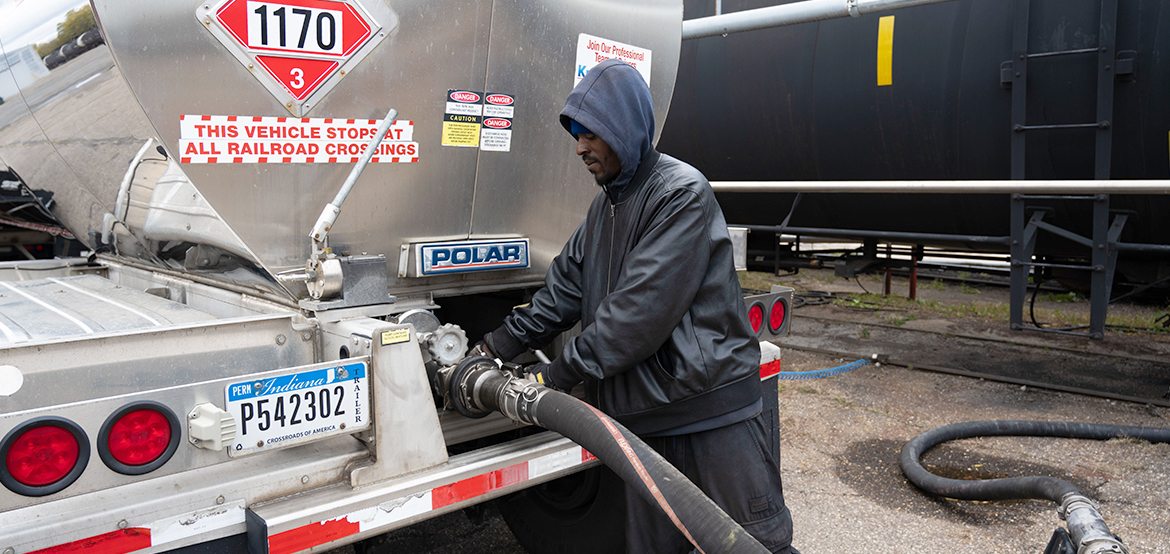
Transloading helps reduce these costs by shifting the long-haul portion of a shipment to the rail system. Rail transportation is typically more cost-efficient for moving large volumes over long distances. Once the product reaches a strategically located transload facility, it is transferred into tanker trucks for final delivery. The result is fewer long-haul truck miles, and a lower cost per gallon moved.
Fewer Miles, Lower Operating Expenses
Reducing truck miles does more than lower fuel costs. It also helps limit maintenance expenses, reduce equipment downtime, and ease pressure on driver availability. Shorter routes allow trucks to cycle faster, improve asset utilization, and help fleets support more deliveries with the same equipment.
For shippers, this translates to a transportation strategy that is not only more cost-effective, but also more scalable during periods of high demand.
Improved Network Efficiency
Transloading supports a forward-placed inventory strategy, which allows companies to move products closer to end markets instead of hauling them the entire distance by truck. This flexibility reduces empty truck miles, improves route planning, and helps balance capacity across a broader network.
Rather than sending trucks on long, inefficient trips, transloading works like a regional distribution point. Rail transportation supports the long moves, and trucks focus on shorter, more efficient routes where they perform best. This approach keeps equipment moving, reduces waste, and plays a major role in controlling transportation costs.
Cost Control Without Compromising Safety
In bulk liquid transportation, cost savings only matter if safety and compliance stay intact. Cutting costs at the expense of safety often leads to bigger problems down the road.
Transloading helps control costs by reducing long-haul truck miles while keeping product handling in controlled, purpose-built environments. Defined procedures, trained operators, and fewer miles on the road help lower risk and limit exposure across the supply chain.
Over time, fewer miles and fewer uncontrolled variables can also reduce the likelihood of incidents, helping manage insurance costs while maintaining a safer, more reliable transportation strategy.
A Smarter Way to Move Bulk Liquids
For companies shipping fuel, chemicals, and other regulated liquids at scale, transloading is not a shortcut. It is a strategic approach to transportation that balances cost, safety, and reliability.
At Kenan Advantage Group, transloading is one of many tools used to design efficient bulk liquid supply chains. By leveraging rail for long-haul efficiency and trucks for precise regional delivery, shippers can reduce transportation costs while keeping products moving safely and on schedule.
If you are looking for ways to lower your transportation spend without sacrificing service or compliance, transloading may be the missing piece.
Want to explore how transloading could fit into your bulk liquid transportation strategy?
Connect with the Kenan Advantage Group team to learn how we help design cost-efficient, reliable logistics solutions built around your network.
Contact us to start the conversation.