Rising transportation costs, supply chain disruptions, and increasing customer expectations are forcing businesses to find more efficient ways to move products.
One strategy gaining momentum across industries is transloading.
Transloading allows companies to combine the cost advantages of rail transportation with the flexibility of trucking, helping reduce transportation costs, improve market reach, and strengthen supply chain performance.
While transloading supports many industries, it is particularly valuable for chemical manufacturers and distributors moving bulk products over long distances.
What Is Transloading?
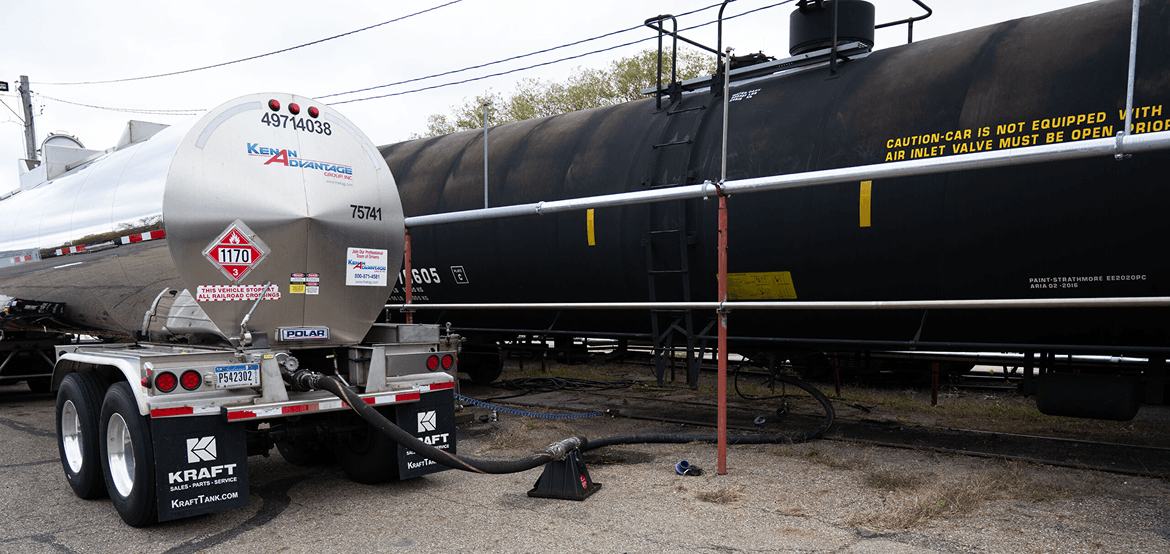
Transloading is the process of transferring freight from one mode of transportation to another during transit.
Most commonly, products are transferred between rail and truck transportation. A shipment may travel hundreds of miles by rail before being transferred to a truck for final delivery to a facility that does not have direct rail access.
For example, a chemical manufacturer shipping caustic soda, sulfuric acid, plastic resins, or specialty chemicals from a Gulf Coast production facility may use rail for the long-haul portion of the journey. Once the shipment reaches a strategically located transload facility, the product is transferred into tank trucks for final delivery.
This rail-to-truck approach allows businesses to leverage the efficiency of rail transportation while maintaining the flexibility needed for customer delivery.
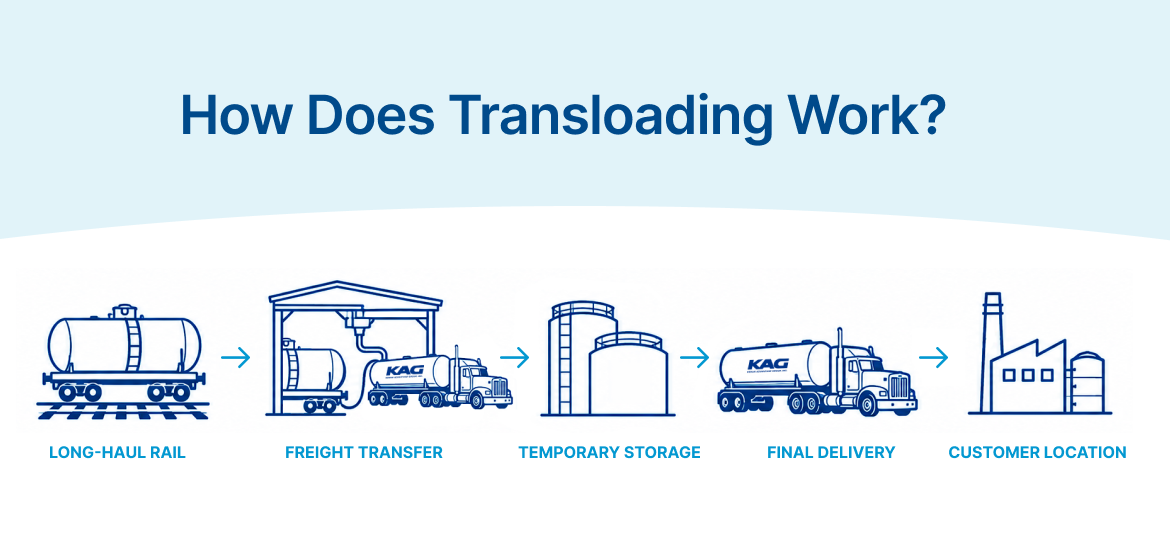
A typical transloading process includes:
- Product arrives at a transload facility by rail or truck.
- Freight is transferred to a different mode of transportation.
- Temporary storage may be used when needed.
- The shipment is loaded for final delivery.
- Product arrives at the customer location.
For chemical products, transloading operations often involve specialized equipment and handling procedures. Depending on the commodity, facilities may utilize liquid storage tanks, pumping systems, heated unloading capabilities, vapor recovery systems, and product-specific containment measures.
These capabilities help ensure products are transferred safely while maintaining quality and regulatory compliance.
Benefits of Transloading
Lower Transportation Costs
Rail transportation is often more cost-effective than trucking for long-distance bulk shipments. By combining rail for the long haul and trucks for final delivery, businesses can significantly reduce overall freight costs.
Expanded Market Reach
Transloading allows companies to serve customers beyond their existing transportation footprint. Products can be delivered to facilities that do not have direct rail access, opening new markets without requiring additional infrastructure.
Greater Transportation Flexibility
Customer demand, inventory requirements, and market conditions can change quickly. Transloading gives businesses the ability to move products between rail, truck, and storage networks as conditions evolve.
Improved Inventory Management
Many transload facilities provide storage capabilities that allow businesses to position inventory closer to customers. This can improve response times, support seasonal demand fluctuations, and reduce lead times.
Increased Supply Chain Resilience
A diversified transportation strategy creates additional routing options and helps reduce the impact of transportation disruptions, equipment shortages, or network congestion.
Rail Access Without Building Rail Infrastructure
One of the biggest advantages of transloading is the ability to utilize rail transportation without investing in private rail infrastructure.
Building and maintaining rail-served facilities can require significant capital investment. Transloading provides access to rail networks through strategically located facilities, allowing businesses to capture the benefits of rail transportation without the expense of constructing their own rail connections.
This makes rail transportation accessible to facilities of all sizes, regardless of whether they are directly rail-served.
Why Chemical Companies Use Transloading
Chemical products often move in large volumes, require specialized handling, and travel significant distances between production facilities and end users.
Transloading helps chemical manufacturers and distributors:
- Reduce transportation costs through rail utilization
- Access customers without rail service
- Position inventory closer to key markets
- Increase transportation flexibility
- Maintain product integrity through specialized handling procedures
- Support safe and compliant product movement
For many chemical companies, transloading serves as a critical link between production, storage, distribution, and final delivery.
Industries That Benefit from Transloading
While transloading supports a wide range of industries, it is especially valuable for businesses moving bulk products.
Common products handled through transload networks include:
- Acids and caustics
- Industrial solvents
- Plastic resins
- Specialty chemicals
- Fertilizer products
- Food-grade ingredients
- Industrial gases
- Construction materials
- Energy commodities
For these industries, transloading provides access to more efficient transportation options while supporting safe and compliant product handling.
Choosing the Right Transloading Partner
Not all transloading providers offer the same capabilities. When evaluating a transloading partner, businesses should consider:
- Product handling expertise
- Safety and compliance standards
- Storage capabilities
- Geographic coverage
- Specialized equipment and facility capabilities
- Transportation network integration
For chemical products, specialized experience is especially important. Providers should have the equipment, training, certifications, and operating procedures necessary to safely handle bulk liquid and dry chemical commodities.
The Bottom Line
Transloading is more than a freight transfer process. It is a strategic logistics solution that combines the efficiency of rail transportation with the flexibility of trucking.
For chemical manufacturers, distributors, and other bulk commodity shippers, transloading can reduce transportation costs, improve market access, support inventory strategies, and create a more resilient supply chain.
As transportation networks continue to evolve, businesses that leverage transloading are often better positioned to control costs, adapt to changing demand, and serve customers more effectively.
Ready to Explore a Transloading Strategy?
Every supply chain is different. The right transloading solution depends on your products, transportation network, customer locations, storage requirements, and growth objectives.
Whether you’re looking to reduce transportation costs, expand market reach, improve inventory positioning, or gain access to rail transportation without investing in rail infrastructure, transloading may offer new opportunities for your business.
Complete the form below to connect with a KAG transloading specialist. We’ll help evaluate your current transportation network and identify opportunities to improve efficiency, flexibility, and long-term supply chain performance.